How Many Grams in an Ounce? Exact Answer and Chart
 By Shihab Mia June 20, 2026 5 min read
Quick answer
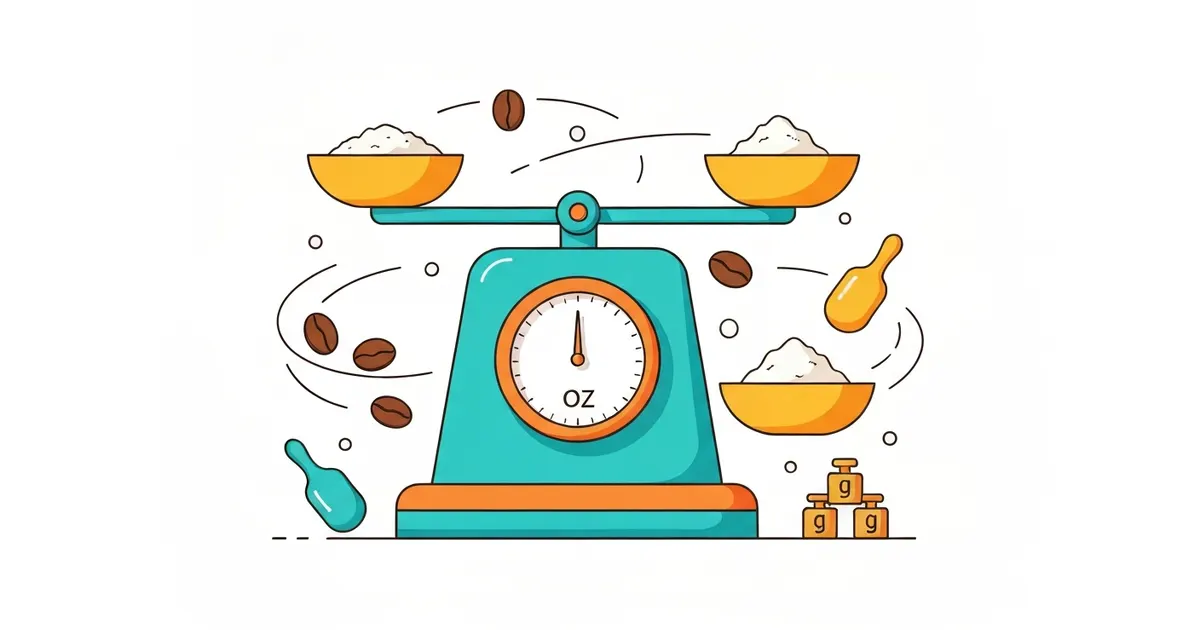
There are 28.35 grams in 1 ounce (avoirdupois, the standard ounce of weight). For quick mental maths, round to 28 grams.
This is a weight conversion, so it is the same number whether you are weighing flour, coffee, cheese or anything else. The precise factor is 1 ounce equals 28.349523 grams, which almost everyone shortens to 28.35 g. In the other direction, 1 gram is about 0.0353 ounces, so it takes a little more than 28 grams to make a single ounce.
That single number unlocks every other ounce and gram conversion you are likely to need. Once you know one ounce is roughly 28 grams, you can scale up to pounds, kilograms and recipe quantities in your head. The rest of this guide explains where the figure comes from, when to use the exact version, and how to avoid the mistakes that trip people up.
Where the 28.35 figure comes from
The ounce most people mean is the avoirdupois ounce, the everyday unit used for groceries, body weight and postage in the United States and, informally, in the United Kingdom. By international agreement, one avoirdupois pound is defined as exactly 453.59237 grams. A pound contains 16 ounces, so dividing 453.59237 by 16 gives 28.349523 grams per ounce. That is the source of the number, and it is fixed by definition rather than measured.
Because the value is exact, you can trust it for science, shipping and trade. In practice the level of precision you keep depends on the job. A postal worker weighing a parcel and a baker measuring chocolate do not need six decimal places. Rounding to 28.35 g is accurate enough for almost every kitchen and shipping task, and rounding further to 28 g is fine for quick estimates.
Exact vs rounded: which should you use?
Choosing between the exact and rounded values is mostly about how the small difference adds up. One ounce rounded to 28 g loses about 0.35 g, which is invisible for a single item but grows when you multiply.
- Use 28 g for fast mental maths, shopping estimates and rough recipe scaling where a gram or two does not matter.
- Use 28.35 g for everyday cooking, baking and parcel weights, where it is precise enough yet easy to remember.
- Use 28.349523 g for laboratory work, precious metals or anything where the total spans many ounces and errors compound.
- When converting large amounts, do the full-precision maths first and round only the final answer.
Ounce to gram chart
This chart covers the conversions that come up most often in kitchens and at the post office. The exact column uses 28.349523 g per ounce, while the rounded column gives a clean number for quick reference.
| Ounces | Grams (exact) | Grams (rounded) |
|---|---|---|
| 0.25 oz | 7.09 g | 7 g |
| 0.5 oz | 14.17 g | 14 g |
| 1 oz | 28.35 g | 28 g |
| 2 oz | 56.70 g | 57 g |
| 3 oz | 85.05 g | 85 g |
| 4 oz (quarter pound) | 113.40 g | 113 g |
| 5 oz | 141.75 g | 142 g |
| 8 oz (half pound) | 226.80 g | 227 g |
| 12 oz | 340.19 g | 340 g |
| 16 oz (1 lb) | 453.59 g | 454 g |
US, UK and metric differences
The avoirdupois ounce is the same 28.35 g in both the United States and the United Kingdom, so a recipe that calls for ounces of butter works identically on either side of the Atlantic. The metric world uses grams and kilograms instead, and 1 kilogram equals 1000 grams or about 35.27 ounces. Most modern British recipes are written in grams, while many US recipes still use ounces and cups, which is why a reliable converter is so handy.
One source of genuine confusion is the troy ounce, used only for precious metals such as gold and silver. A troy ounce is heavier, at about 31.10 grams, so a troy ounce of gold weighs more than a normal ounce of sugar. Unless you are dealing with bullion or jewellery, you want the avoirdupois ounce of 28.35 g. If you also juggle volume measures, the guide on ounces in a cup explains how the word ounce changes meaning between weight and volume.
Worked example: converting 7 ounces to grams
A worked example makes the method obvious. Say a recipe asks for 7 ounces of dark chocolate and your scale only reads in grams. Multiply the ounces by the conversion factor: 7 times 28.349523 equals 198.45 grams. For the kitchen you can round that to 198 g, or even 200 g if you are not fussy. If you prefer the quick estimate, 7 times 28 gives 196 g, which is close enough for most baking.
The same two-step pattern works for any value. First decide whether you need exact or rounded precision, then multiply by 28.35 or 28. To go the other way, divide grams by 28.35. So 500 grams divided by 28.35 equals about 17.6 ounces. If you would rather skip the maths entirely, the weight converter does both directions and never grabs the wrong kind of ounce.
Good to know
A digital scale that toggles between grams and ounces is the simplest fix of all. Weigh in whichever unit your recipe uses and skip the conversion completely. When you do need the maths, multiply ounces by 28.35 and you are done.
Practical kitchen and real-world examples
Seeing the conversion attached to familiar items makes it stick. Here are quantities you have probably handled, expressed both ways.
- A standard US chocolate bar is often 1.55 oz, which is about 44 grams.
- A quarter-pound burger patty is 4 oz, or roughly 113 grams of meat.
- A typical bag of coffee is 12 oz, equal to about 340 grams of beans.
- A stick of US butter is 4 oz, which is 113 grams and equals half a cup.
- A letter that costs standard postage usually weighs under 1 oz, or under 28 grams.
When you are scaling a recipe, multiplying ounces by 28.35 keeps the proportions correct even if you switch the whole recipe to grams. If your measuring also involves spoons and cups, the breakdown in teaspoons in a tablespoon pairs nicely with this weight guide for fully metric cooking.
Common mistakes to avoid
Most ounce to gram errors come from mixing up units that share a name or rounding at the wrong moment. Watch for these traps.
- Confusing a fluid ounce with a weight ounce. A fluid ounce measures volume, not weight, so it does not convert directly to grams.
- Using the troy ounce by accident. Stick to 28.35 g for food and 31.10 g only for precious metals.
- Rounding too early in a multi-step calculation, which lets small errors stack up into a noticeable difference.
- Assuming grams of one ingredient equal grams of another by volume. Weight is weight, but a cup of flour and a cup of water weigh different amounts.
- Forgetting that 16 ounces make a pound, not 100, when converting larger weights.
Do not confuse it with a fluid ounce
A fluid ounce measures volume, not weight, and does not convert to grams directly. This guide is about the ounce of weight, where 16 ounces make 1 pound and 1 ounce is 28.35 grams.
Convert any weight instantly
When you need grams to pounds, kilograms to ounces, or anything in between, type the number into the weight converter and read the answer. It handles the exact factors for you, so there is no rounding to remember and no risk of grabbing the troy ounce by mistake.
⚖️ Try the free tool Weight Converter Free weight converter for kg to lbs, pounds to kg, grams to ounces and stone to pounds. Switch metric and imperial mass units with exact factors and charts.Frequently asked questions
How many grams are in an ounce?
There are 28.35 grams in 1 ounce of weight. The exact figure is 28.349523 grams, which most people round to 28.35 g or simply 28 g for quick mental maths. This applies to the standard avoirdupois ounce used for food, body weight and postage.
How many grams in a pound?
There are about 453.59 grams in 1 pound. A pound contains 16 ounces, and each ounce is 28.35 grams, so 16 times 28.35 gives roughly 454 grams. The exact international definition of a pound is 453.59237 grams.
Is a fluid ounce the same as an ounce?
No. A fluid ounce measures volume, while an ounce of weight measures mass. Only the weight ounce converts directly to 28.35 grams. A fluid ounce of water happens to weigh close to an ounce, but that coincidence does not hold for other liquids.
How many ounces are in a gram?
One gram is about 0.0353 ounces, which means it takes roughly 28 grams to make a single ounce. To go from grams to ounces, divide the number of grams by 28.35. For example, 100 grams is about 3.53 ounces.
Why is a troy ounce different?
A troy ounce is a separate unit used only for precious metals like gold and silver, and it weighs about 31.10 grams. The everyday avoirdupois ounce used for food and most goods weighs 28.35 grams, so always check which ounce a source means when metals are involved.
How many grams are in a half ounce?
A half ounce is about 14.17 grams, which most people round to 14 grams. You get this by halving the 28.35 grams in a full ounce. A quarter ounce works out to roughly 7.09 grams, usually rounded to 7 grams for everyday use.
Why is an ounce 28 grams and not a round number?
The ounce predates the metric system, so its size was never chosen to fit grams neatly. A pound is defined as exactly 453.59237 grams, and an ounce is one sixteenth of that, which gives 28.349523 grams. The awkward decimal is simply the result of converting between two unrelated systems.
Is 100 grams equal to about 3.5 ounces?
Yes. To convert grams to ounces you divide by 28.35, so 100 grams equals 3.527 ounces, which rounds to about 3.5 ounces. This is a handy reference point because many packaged foods are sold in 100 gram portions, making the rough 3.5 ounce figure easy to picture.